 Home > News
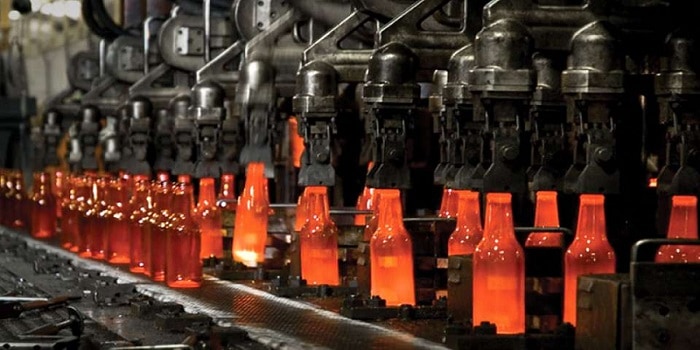
Glass jars are generally surface treated by coating on the hot and cold ends of the annealing furnace. The hot end coating is to place the bottle and can in a hot state (500-600 ° C) after forming in the environment of vaporized tin tetrachloride, titanium tetrachloride or butyl tin tetrachloride, so that these metal compounds are The surface of the hot bottle and can is decomposed and oxidized into an oxide film to fill the micro-cracks on the glass surface, while preventing the generation of surface micro-cracks and improving the mechanical strength of the glass bottle and can. The cold end coating is to use monostearate, oleic acid, polyethylene emulsion, silicone or silane, etc. to spray the surface of the bottle with a temperature of about 100-150 °C at the outlet of the annealing furnace to form a lubricating film. To improve the wear resistance, lubricity and impact strength of the bottle surface. In production, cold end coating and hot end coating are often used in combination. For large-capacity bottles above 1l, some add foam polystyrene or polyethylene film sheaths on their surfaces. The sheath is heat-shrinkable. After being heated, it tightly binds the bottle body. It is tough and elastic, shockproof and anti-friction. When the bottle is broken, no fragments will fly out, which can avoid personal injury.
For reagent bottles, sample bottles, perfume bottles, etc. with glass stoppers, use mortar or emery and water as abrasives to grind mouths and stoppers. High-grade cosmetics and perfume bottles are often ground and polished to clean mold marks and increase luster. High-grade wine bottles or art-decorated bottles and cans are corroded with hydrofluoric acid, resulting in surface light diffusion and delicate hand feeling. In order to print trademarks and decorations on the glass surface, spray color, screen printing, and decal processing methods can be used to apply glass glaze to the surface of the bottle and jar, bake at 600 ° C, and the glaze and glass are fused to form a better quality. pattern. If it is decorated with agricultural production system pigments, it only needs to be melted and baked at 200-300 °C.